
Comparing henna cones: finding the right product for your designs
Which henna cone should you choose to create Mehndi designs on your hands, feet or other parts of the body? With options producing orange or brown results, fast-colouring pastes and cones offering more striking colours, the choice mainly depends on the effect you want and how you work.
This guide draws on our sales experience and the feedback on use we have gathered over time. The products featured are commonly chosen for temporary designs: fine lines, arabesques, flowers and traditional patterns. We compare their practical characteristics without creating an artificial ranking: there is no single ideal cone for everyone.
We have divided the selection into three groups: orange-to-brown shades, reds and blacks. The shades indicated reflect results observed or described for the products concerned; they may vary depending on the skin, application and conditions of use. Formulations and commercial product names may also change from one batch to another.
Quick access:
Orange and brown henna cones: six products to compare
Not all cones in this group behave in the same way. Some produce a colour that develops gradually, while others are designed for faster colouring. The table below shows the most useful differences at a glance.
| Product | Photo | Type of result | What sets it apart | Best suited to |
|---|---|---|---|---|
| Rimal Silk – brown | 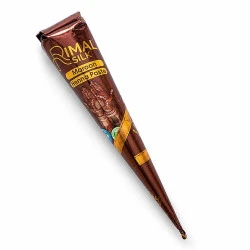 | Fast-developing brown | A product combining henna and colourants; generally a shorter application time; a paste we have found pleasant to handle. | Those looking for a quick result and convenient application. |
| Prem Dulhan – No Chemical Dye | 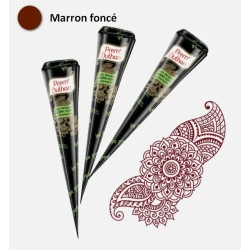 | Brown shade, develops over time | A product in the Prem Dulhan range presented as containing henna and eucalyptus leaves. | People interested in a cone designed for Mehndi patterns. |
| Kaveri – brown | 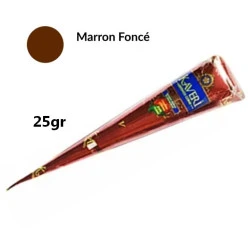 | From orange towards a deeper brown | Visibly green paste; colour develops gradually; a brand widely known among experienced Mehndi users. | Those who prefer a gradual result and are accustomed to working with cones. |
| Golecha – dark brown | 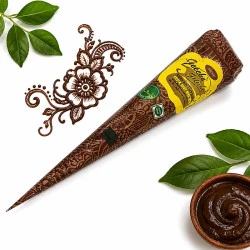 | Brown that develops relatively quickly | A range combining henna and colourants, depending on the product; accessible application for beginners. | Discovering Mehndi or obtaining a practical result. |
| Neha Herbals – intense brown | 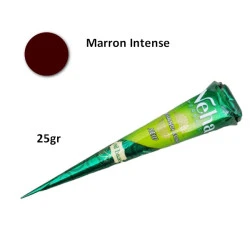 | From orange to darker shades, depending on conditions | Green paste; evolving colour; a popular alternative in the same category of use as Kaveri. | Fans of designs with colour that develops gradually. |
| HelloOrient – henna cone | 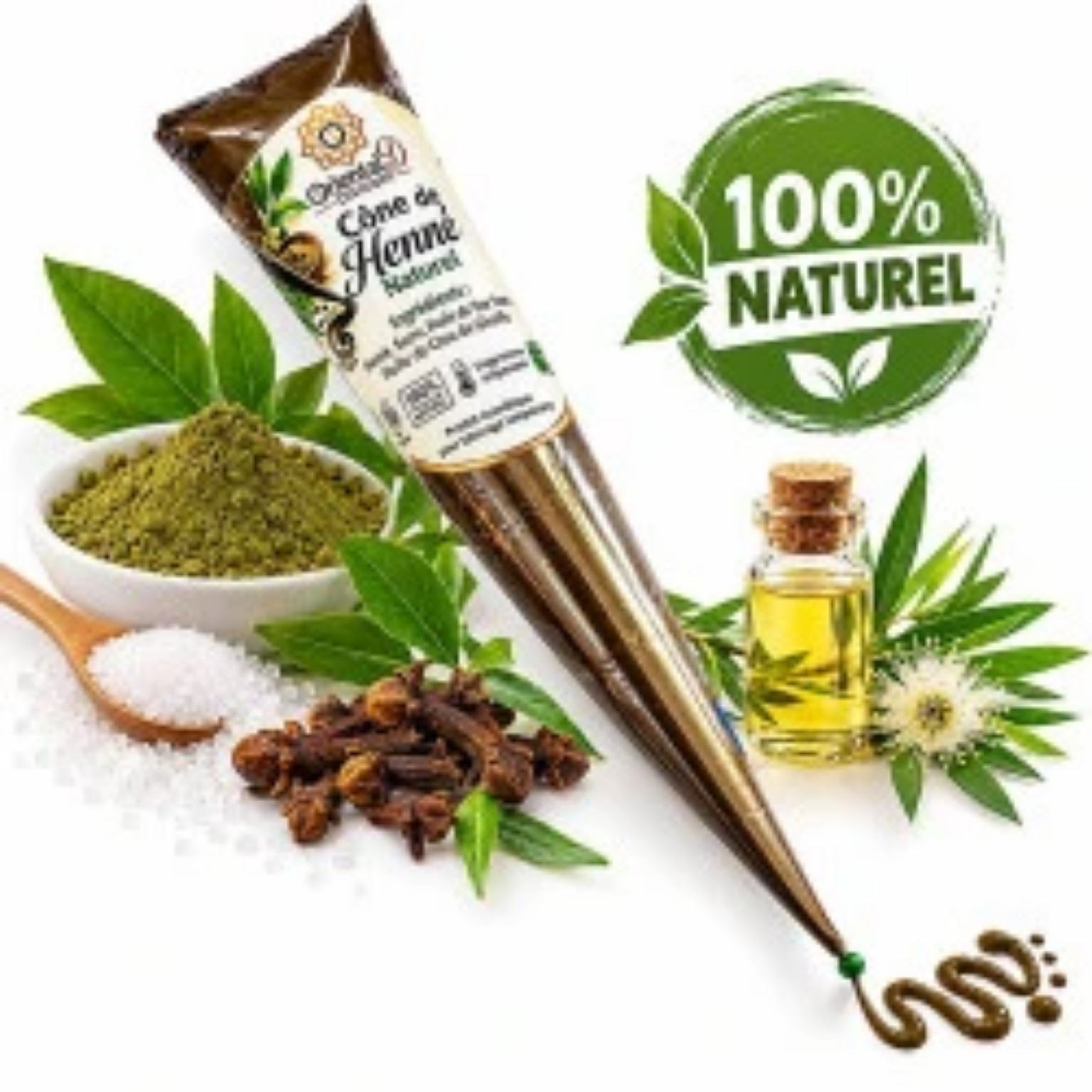 | A henna-derived shade that develops over time | Declared formula: water, henna, sugar (sucrose), tea tree oil and clove oil; no added synthetic colourants or fragrances according to the formulation information supplied. | Those who prefer a short ingredient list and a paste suitable for designs. |
Rimal Silk: speed and an easy-to-work texture
Rimal Silk stands out for its practical approach to henna cones. In its brown version, this product combines a henna base with colourants, generally allowing faster colouring than a henna paste whose shade develops gradually. In our experience, its texture works well for arabesques, flowers and regular patterns. It is worth considering when speed of results matters as much as ease of application.
Prem Dulhan No Chemical Dye: a distinct product within the range
Prem Dulhan markets several variants. Here we have selected the No Chemical Dye version, valued for its different positioning from instantly colouring cones. It is presented as combining henna with eucalyptus leaves. For Mehndi enthusiasts, its appeal lies in a paste designed for drawing fine lines and more elaborate patterns. The commercial name “No Chemical Dye” identifies this specific product: it must not be interpreted as a general guarantee that it contains no chemical substances whatsoever.
Kaveri: a classic for henna designs
Kaveri is a well-known brand among Mehndi enthusiasts. Its green paste and developing colour are characteristics users often notice. After application, the shade may evolve from orange tones towards deeper hues. Kaveri is particularly suited to people accustomed to drawing with cones and allowing the colour to develop. The green colour of the paste is a visual characteristic: on its own, it does not prove that colourants are absent.
Golecha: an accessible choice for beginners
Golecha is another brand widely found in the Mehndi world. Some brown products use colourants alongside henna to achieve faster results. Ease of handling is one of its advantages for beginners: the cone allows drawing without preparing the paste beforehand. However, to compare Golecha products properly, you must distinguish between variants, which do not all have the same colour or necessarily the same composition.
Neha: an alternative with gradually developing colour
Neha Herbals deserves a place in this comparison alongside Kaveri. Its green paste and evolving colour appeal to people who enjoy seeing their design deepen in intensity. In our experience, the result can range from orange tones to very deep shades, sometimes close to burgundy, depending on the skin and application conditions. It is an interesting option for classic or detailed patterns without prioritising immediate colour development.
HelloOrient: a short ingredient list for Mehndi
HelloOrient stands out for its declared formula: water, henna, sugar (sucrose), tea tree oil and clove oil. According to the formula communicated, this short list contains no added synthetic colourants or synthetic fragrances, which may appeal to users who pay close attention to ingredients. The cone is designed for direct paste application and temporary pattern drawing. As with other brands, the choice should be guided by the product's characteristics and the result you want.
Red henna cones: Cherry or brick red?
For those wanting something different from orange-brown shades, red cones offer two very distinct visual styles: a bright red that immediately attracts attention and a warmer red close to terracotta.
| Product | Photo | Desired shade | What sets it apart | Desired effect |
|---|---|---|---|---|
| Golecha Cherry Red | 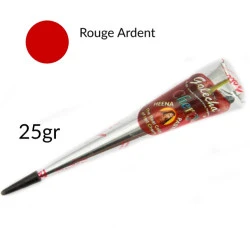 | Bright red | A bold, vivid shade according to the observed result. | Colourful designs that stand out clearly. |
| Amina Red | 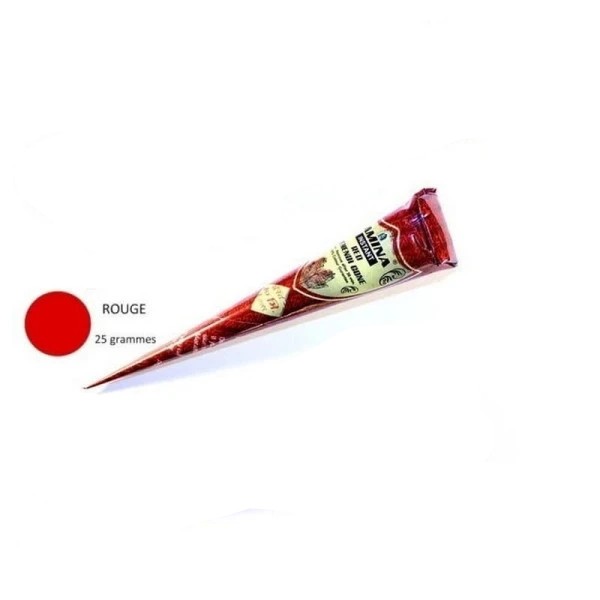 | Terracotta, brick red | A warmer, less vivid shade than Cherry. | Designs with an earthy terracotta-red appearance. |
Golecha Cherry: a red that stands out
Golecha Cherry is aimed at those looking primarily for the visual effect of a bright red. Its appeal lies in making design details stand out through a bold colour. This shade is particularly suited to decorative creations in which colour is central to the pattern's style.
Amina Red: a warmer shade
Amina Red offers something different: a warmer brick or terracotta red. For users who find bright red too intense, this tone provides another possibility. Choosing between the two depends mainly on the aesthetic result desired.
Black cones: Rimal Silk or Golecha?
Black cones appeal to people seeking highly contrasting patterns. In our sales experience, the black variants of Rimal Silk and Golecha are close in terms of the visual effect sought. It is therefore more useful to compare the specific product and availability than to artificially attribute very different performance to them.
| Product | Photo | Desired result | What sets it apart | Desired effect |
|---|---|---|---|---|
| Rimal Silk – black | 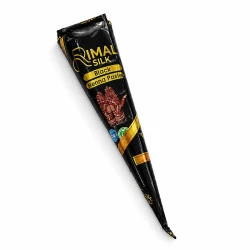 | Strong black | Dark, high-contrast lines; in our experience, a visual result close to the black Golecha product. | Highly visible graphic patterns. |
| Golecha – black | 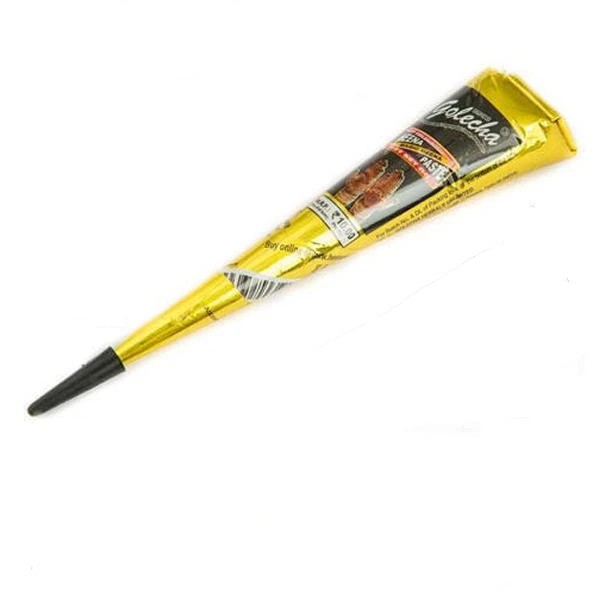 | Strong black | A comparable alternative for achieving dark lines. | Users who favour a contrasting black effect. |
Important: the black colour does not reveal a cone's composition. Ingredients must be checked for each product; we do not describe the black variants as “PPD-free” without evidence specific to that product.
How should you choose your henna cone?
The best cone is not necessarily the one promising the most intense colour. Above all, it is the one that suits how you use henna and the result you expect.
Do you prefer fast colour development? Brown products with accelerated colouring, such as certain Rimal Silk and Golecha variants, should be compared first. They can be convenient when you want a design without waiting a long time for the colour to develop.
Do you enjoy seeing the colour develop? Kaveri and Neha are two products worth exploring, particularly for people familiar with Mehndi cones. HelloOrient may also suit those who prefer a formula declared to contain no added synthetic colourants.
Are you new to cone drawing? Focus first on how easy the cone is to hold, how evenly the paste flows and its texture. Very intense colour is not necessarily the best criterion when learning to draw precise patterns.
Are you looking for a particular colour? For bright red, consider Golecha Cherry; for brick red, Amina Red; for contrasting black, compare the black variants of Rimal Silk and Golecha. Actual shades may differ from photographs.
Frequently asked questions about henna cone brands
What is the difference between Golecha and Kaveri?
Among the products shown here, brown Golecha is associated with achieving a faster result, while Kaveri is appreciated for a shade that develops more over time. However, this difference must be assessed product by product, not indiscriminately applied to the full ranges of both brands.
Which cone should you choose, Kaveri or Neha?
Both are of particular interest to those who enjoy gradually developing colour. Kaveri is very well known in the Mehndi world, while Neha offers an interesting alternative. Texture, handling and personal preference can help decide between the two.
Which henna produces a bright red result?
In this selection, Golecha Cherry aims for a bright red. Amina Red offers a warmer red tending towards brick or terracotta.
Which cone should you choose when starting Mehndi?
For beginners, favour a cone that is comfortable to hold and a paste that flows evenly. Certain Golecha or Rimal Silk products are practical if you want a fast result; the desired colour also matters.
Are the colours shown identical on every skin type?
No. Results may vary with the skin, application time, application conditions and the specific product used. Photos and descriptions help compare colour tendencies; they do not guarantee an exactly identical shade.
Our conclusion: choose according to the result, not just the brand
For Mehndi in orange-to-brown tones, Rimal Silk, Prem Dulhan, Kaveri, Golecha, Neha and HelloOrient offer different approaches, from gradually developing shades to faster colouring. Among the reds, Golecha Cherry favours vibrancy, while Amina Red offers a more terracotta appearance. For a contrasting black shade, Rimal Silk and Golecha are two products worth comparing.
The essential thing is to choose a cone suited to your technique, preferences and desired colour. Find the available products in the henna cone selection offered by OrientalDiscount.