
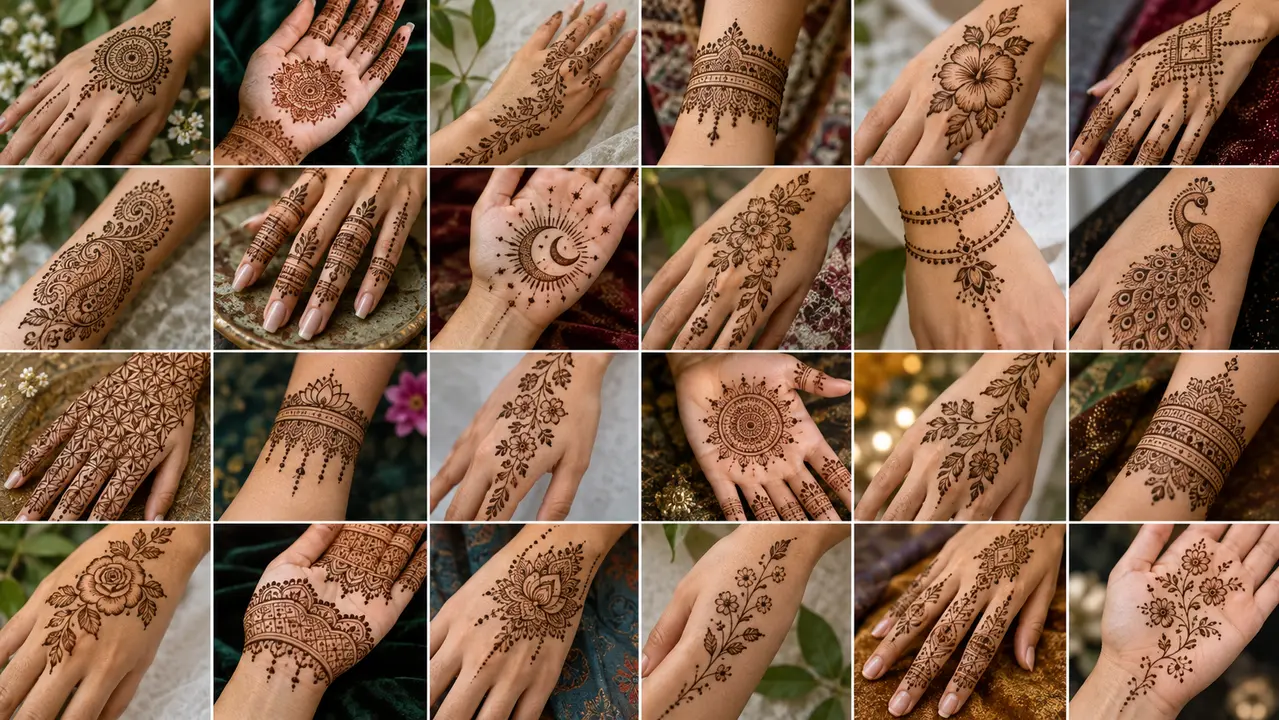
Henna reactions, ingredients and advice for choosing a clearly identified preparation: the essentials, without alarmism.
Contents
- Why discuss risks without causing fear?
- A product's commercial name does not describe its formula
- PPD: understanding the documented evidence
- The right questions to ask before application
- What labels do — and do not — mean
- Choosing peace of mind, not fear
- Recognising reliable commercial information
Why discuss risks without causing fear?
Henna is primarily associated with the pleasure of creating a design and with beauty traditions. However, when applying a product to skin, a few checks are sensible. The aim is neither to turn a festive design into a medical consultation nor to portray every preparation as suspicious. It is simply to know what information to request from a seller or the person applying the henna.
Experiences reported online are often striking, but they do not provide a reliable rate of complications across all users. A photograph of a severe reaction does not represent every product, just as an absence of complaints does not prove a product is suitable for everyone. Keeping both points in mind allows for a balanced perspective.
A product's commercial name does not describe its formula
A cone described as “natural”, “brown”, “black”, “fast” or “premium” must be assessed on its ingredients and intended use. Plant-based henna comes from Lawsonia inermis; other colours and effects involve different formulations. A colourant authorised for hair is not necessarily authorised for decorative skin application: permissions depend on the intended use and the country.
Ask for a legible ingredient list, manufacturer information and storage instructions. “PPD-free” claims are helpful in identifying the stated absence of that ingredient, but they do not replace examining the rest of the formula. Ideally, products from specialist sellers offer this transparency; it is not automatically guaranteed by the shop's name.
PPD: understanding the documented evidence
Paraphenylenediamine, commonly abbreviated PPD, has been associated with sometimes serious skin reactions in preparations sold as “black henna”. The FDA and NHS have documented this concern. That does not mean that all black products contain PPD. Various preparations exist, and colour alone cannot establish composition.
A reaction may develop after a delay and include redness, itching or blisters. If a significant reaction occurs, stop using the product and seek advice from a healthcare professional; severe or rapidly worsening symptoms require urgent medical attention. This brief explanation is enough here: our purpose is to help you make informed product choices.
Remember: before trusting a promise or a photograph, always check what kind of product it is and what you want the design to achieve.
The right questions to ask before application
You can ask an artist or seller: what is the product's full name? What is it intended for? Can I see the ingredients? Are instructions available? How long has the cone been open? How was it stored? Answers should be straightforward and consistent, without promises of “zero allergies”.
If you have previously reacted to a dye or cosmetic, particular caution is warranted. Performing a quick test yourself is not enough to rule out every possible allergy. If you do not know the formula or the person applying it refuses to disclose it, it is better to choose another service.
What labels do — and do not — mean
Statements such as “made in India”, “traditional” or “natural” describe, at most, an origin or market positioning. They do not replace product documentation. “Tested” does not mean “guaranteed reaction-free”. An older Hennediscount article promised laboratory certificates for all imports; without current, verifiable documents, that promise must not be repeated.
Good editorial practice means comparing the information actually available. A shop may be reputable yet not suit every need. It gains credibility by explaining what it knows and what it does not, rather than presenting a marketing description as scientific approval.
Choosing peace of mind, not fear
For a beautiful design, favour a product specifically intended for skin decoration, clear product information and careful application. You can compare OrientalDiscount's henna selection with those of other specialist shops. Hennediscount has a commercial relationship with OrientalDiscount: this purchasing suggestion does not constitute independent health or safety expertise.
Once these checks are complete, return to what matters: choosing a design suited to your hand, allowing sufficient application time and enjoying the developing colour. Knowledge about ingredients should help you enjoy the experience, not abandon all creativity.
Recognising reliable commercial information
A product labelled “100% natural” without details is not necessarily easy to assess. Conversely, a listing that names the ingredients in understandable terms, identifies the manufacturer and explains usage conditions allows you to ask specific questions. The aim is not to collect labels but to obtain information matching the product currently sold.
Avoid hasty conclusions based on a forum or an old photograph. Formulations can change. If a shop cannot provide essential information, look for a better-documented product without assuming every similar preparation is identical.
Frequently asked questions
Can natural henna sometimes cause reactions?
Yes. Even a plant-derived ingredient may cause reactions in some people; natural does not mean risk-free.
Do all black cones contain PPD?
No. Colour alone does not reveal the formulation.
Does a reputable shop guarantee zero allergies?
No. It can, however, provide ingredient and traceability information.
Can a reaction appear later?
Yes. Some reactions are delayed.
What is the best first step?
Read the label, check that it is intended for skin and request any missing information.
Further reading
Sources and references
- FDA — https://www.fda.gov/cosmetics/cosmetic-products/temporary-tattoos-hennamehndi-and-black-henna-fact-sheet (for relevant background; not to be interpreted as commercial endorsement)
- NHS — https://www.nhs.uk/conditions/hair-dye-reactions/ (for relevant background; not to be interpreted as commercial endorsement)
- Kew — https://powo.science.kew.org/ (for relevant background; not to be interpreted as commercial endorsement)