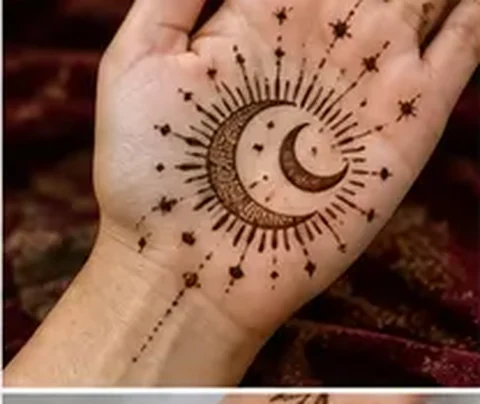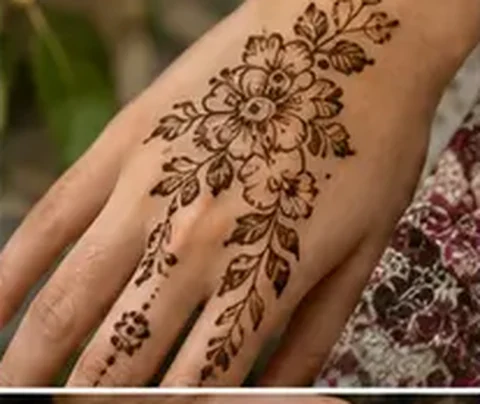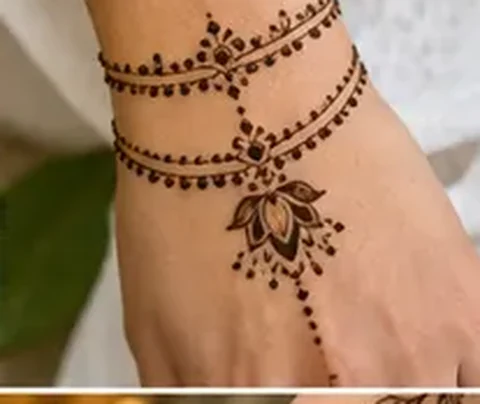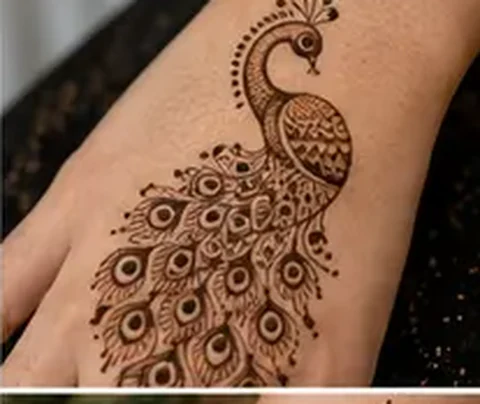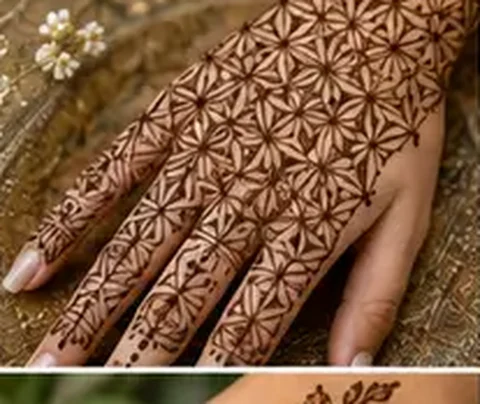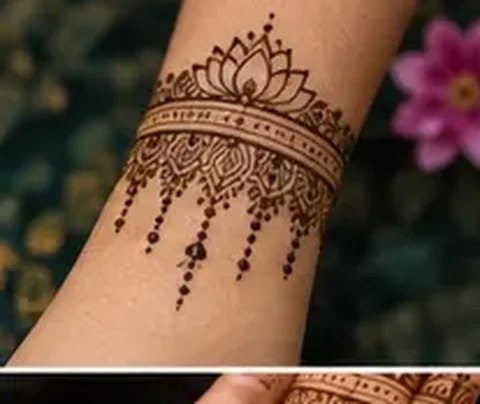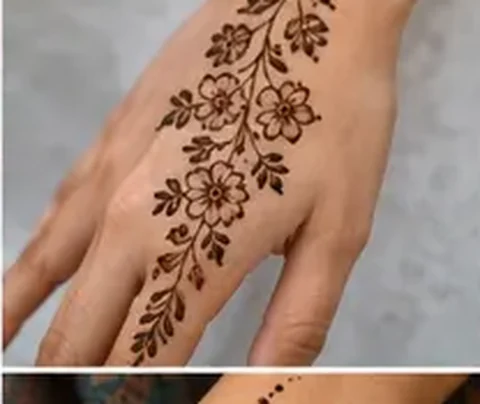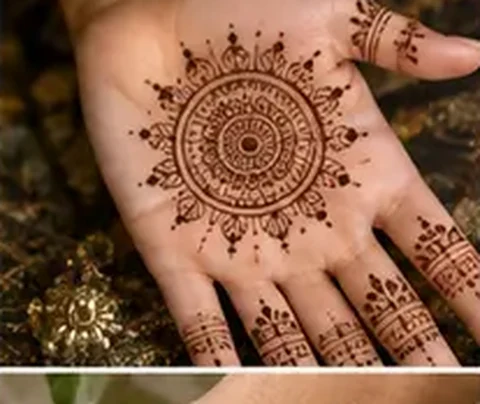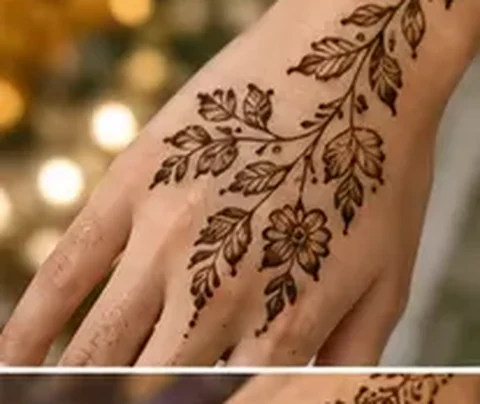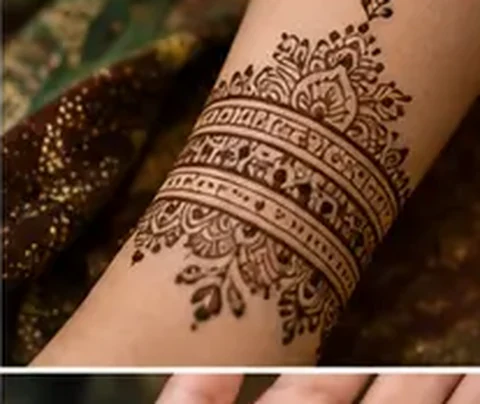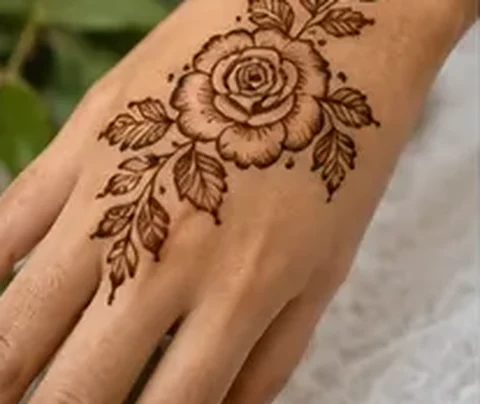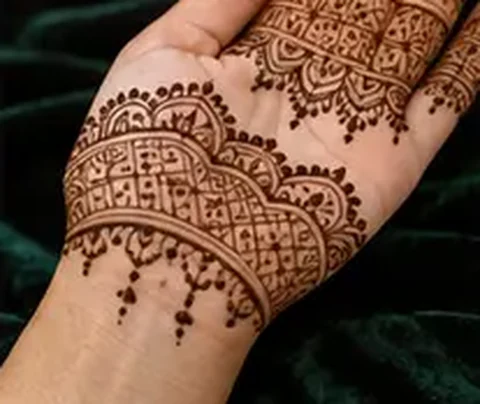
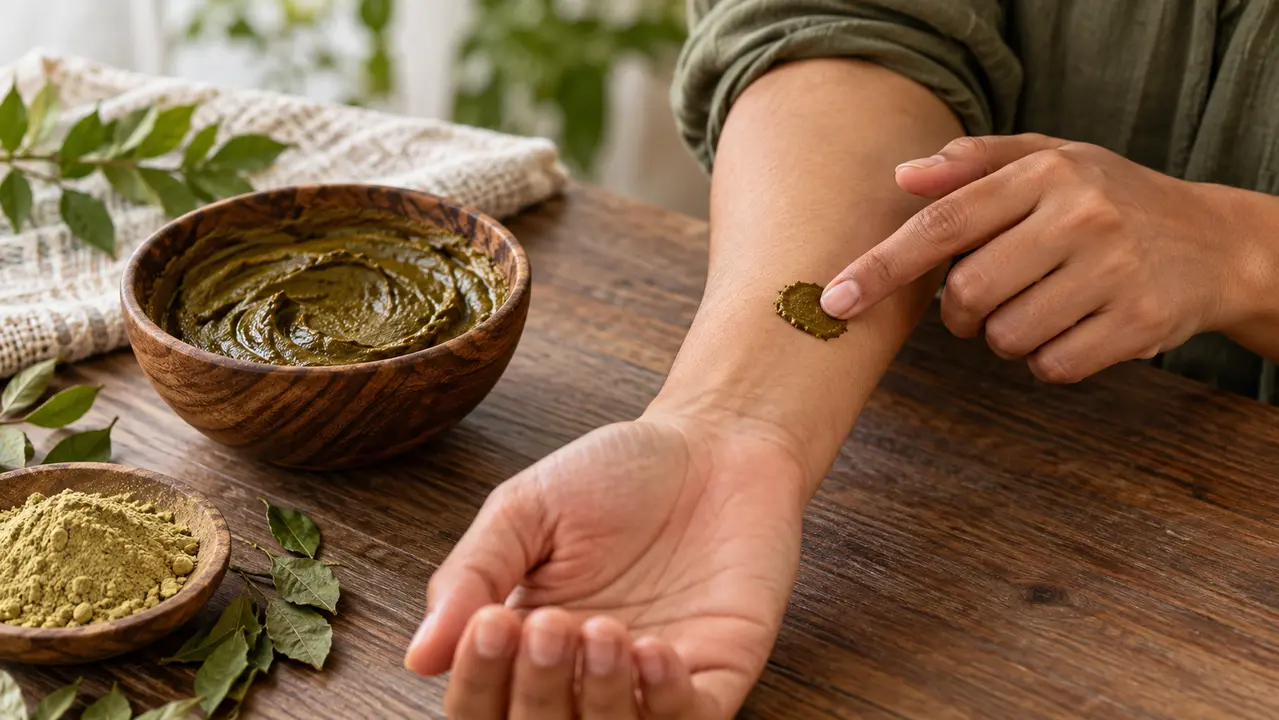
Explore 24 henna design ideas for hands, fingers, feet and special occasions.
Contents
- How to look at a gallery with a designer's eye
- Eight designs for hands
- Six ideas for fingers
- Five inspirations for feet and ankles
- Five ideas for special occasions
- Turning inspiration into a real choice
- Creating a genuinely useful inspiration board
How to look at a gallery with a designer's eye
A useful gallery is more than a row of pretty photographs. Observe the design's placement, the direction of its lines, repeated shapes and how much skin is left bare. Two floral designs can have very different personalities: one follows a light diagonal, while the other fills a central circle. Both may be successful, but their compositions say different things.
Before choosing, ask what effect you want: jewellery-like decoration on the skin, festive ornamentation, a discreet detail or an elaborate bridal design. This choice influences the result more than the design's difficulty. The 24 suggestions below are an editorial selection intended to be illustrated with original images, not photographs claiming to document specific traditions.
Eight designs for hands
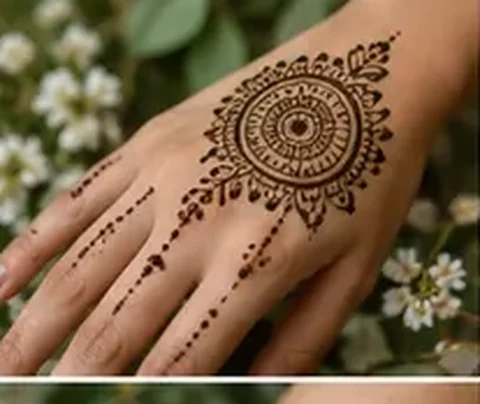
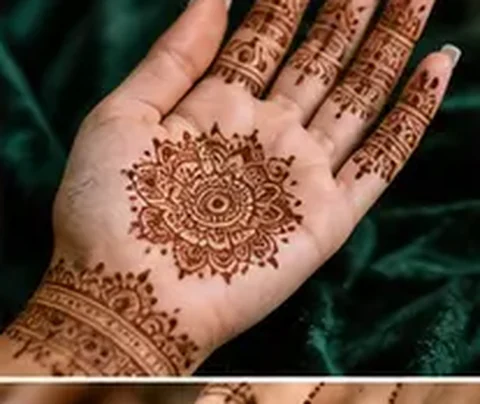
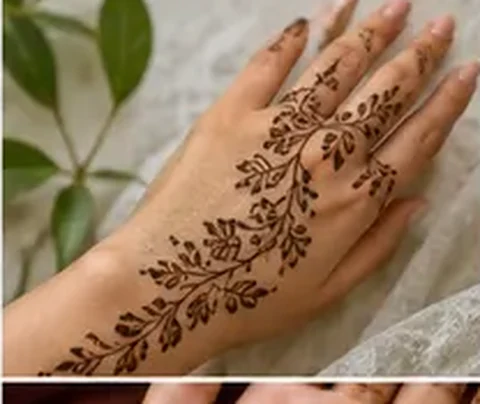
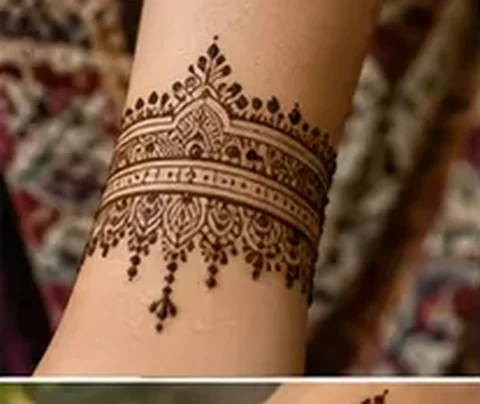
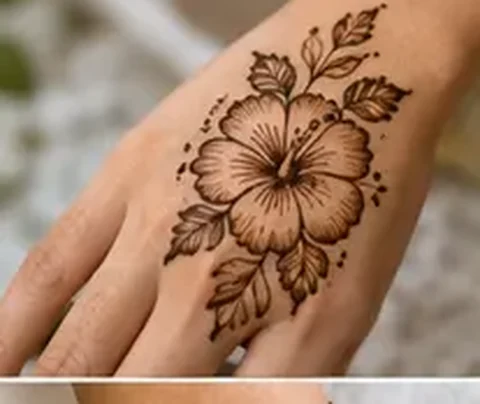
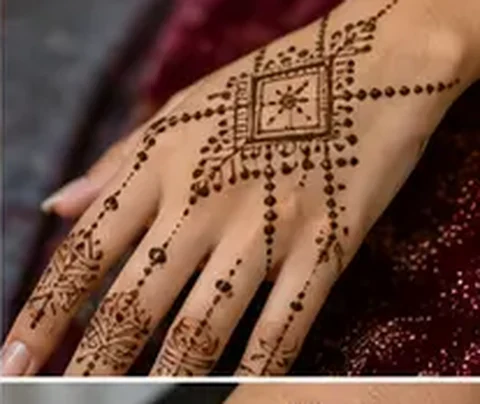
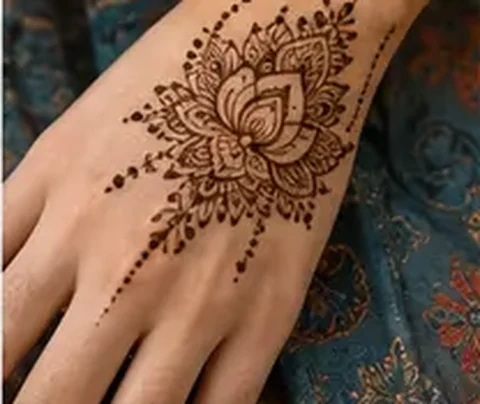
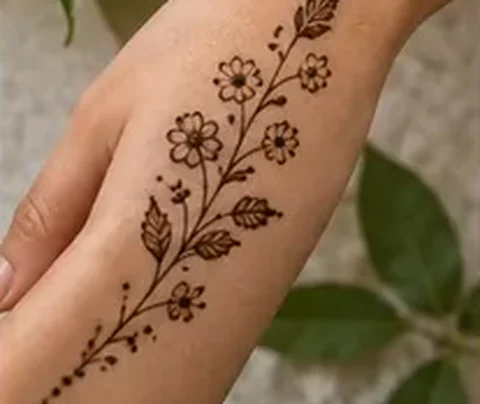
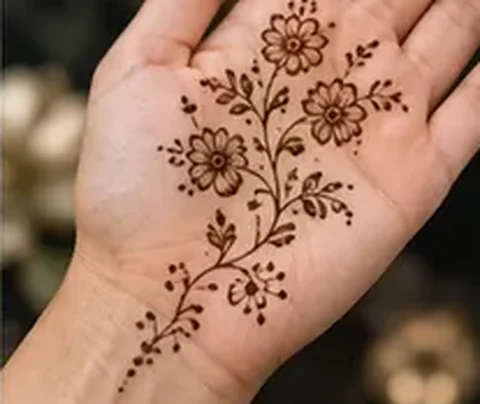
1. Airy central flower. A flower on the back of the hand, surrounded by empty space, immediately draws the eye. 2. Diagonal branch. A plant-inspired line runs from the wrist towards the index finger, naturally following the hand's shape. 3. Half mandala. A circular motif placed along one edge creates a graphic effect without covering the whole area. 4. Delicate cuff. A decorative border concentrates near the wrist and leaves the fingers free.
5. Asymmetrical rosette. The design develops along one side, suiting a modern aesthetic. 6. Repeated little flowers. A regular rhythm creates a textile-like impression. 7. Leaves and dots. A few elements are enough when their spacing is thoughtfully planned. 8. Large festive design. A denser composition can combine borders and arabesques; above all, it requires good organisation of the areas.
Six ideas for fingers
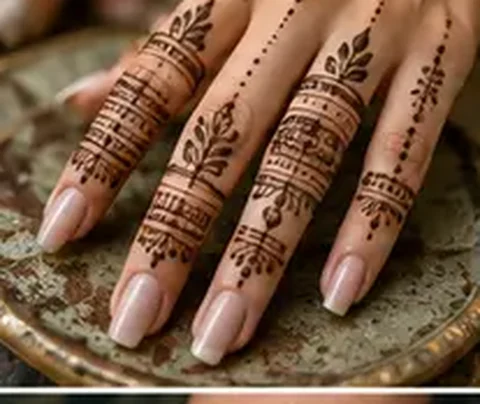
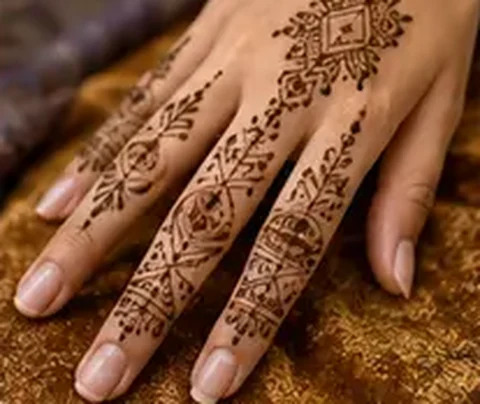
9. Botanical ring. A narrow border suggests a ring without copying a piece of jewellery. 10. Trail of dots. Three or four spaced dots are understated and easy to coordinate. 11. Small leaf near the nail. The design follows the finger's line. 12. Double fine line. A minimalist composition, especially easy to read in close-up photographs.
13. Chevron pattern. Alternating small angles creates a geometric effect. 14. Single flower on the ring finger. The contrast with the undecorated fingers becomes the idea behind the design. Always bear the creases in mind: a motif that looks beautiful on a still hand should remain comfortable when the fingers move.
Remember: before trusting a promise or a photograph, always check what kind of product it is and what you want the design to achieve.
Five inspirations for feet and ankles
15. Floral anklet. Flowers placed at regular intervals accentuate the ankle. 16. Vine across the top of the foot. A flexible branch follows the contours. 17. Small side rosette. It looks elegant with a sandal. 18. Leaves near the toes. A short design may be enough instead of a full composition. 19. Geometric line along the side of the foot. It catches the eye without covering the whole area.
When choosing, think about the footwear you will wear, areas subject to rubbing and the day on which you want to show the design. The best placement will not be the same for a barefoot evening and a day spent in closed shoes.
Five ideas for special occasions
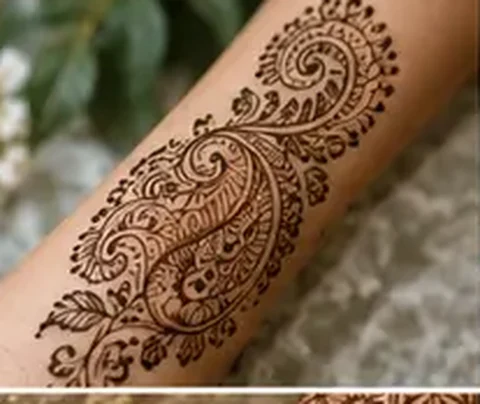
20. Mehndi-inspired bridal design. An elaborate composition may cover the hand and forearm with several coordinated elements. 21. Festive border. It frames the wrist and complements an outfit without stealing all the attention. 22. Clean contemporary design. One floral line may be enough. 23. Decorative white henna. A white cosmetic product suitable for the skin creates a lace effect without the typical plant-based stain. 24. Patisserie-inspired pattern. Reproduce arabesques with suitable food ingredients, never with henna paste.
These ideas are not universal recipes. Some require more skill, while others are simply decorative. The point is to choose a project suited to your ability and the occasion.
Turning inspiration into a real choice
To choose between three designs, compare them on four points: placement, how much area they fill, line delicacy and context. An elaborate ceremonial design may seem excessive for an ordinary day, whereas a small leaf that appears modest in a photograph can look very elegant on its own.
Creating a genuinely useful inspiration board
You can gather your ideas on one board with three columns: design, placement and perceived difficulty. Feel free to mark designs you prefer for their structure rather than the model's skin tone or the photograph's lighting. A coherent selection also makes discussing ideas with an artist easier.
Avoid indiscriminately mixing heavily retouched images with natural photographs: the levels of detail are not always comparable. For a festive project, choose a board showing at least one hand in a natural position and one close-up of the design.
Frequently asked questions
Why 24 designs?
To show several types of composition and body areas without restricting henna to a single style.
Does a design always have a meaning?
No. Some interpretations exist in specific contexts, but a decorative design does not necessarily have universal symbolism.
Can Indian-inspired style be combined with minimalism?
Yes, provided you create a coherent composition and do not claim to reproduce a specific ritual.
Does a beautiful hand design require a lot of henna?
No. Empty space is part of the composition.
Do patisserie patterns use henna?
No. Use only suitable food products.
Further reading
Sources and references
- UNESCO — https://ich.unesco.org/en/RL/henna-rituals-aesthetic-and-social-practices-02116 (for relevant background; not to be interpreted as commercial endorsement)
- Kew — https://powo.science.kew.org/ (for relevant background; not to be interpreted as commercial endorsement)