
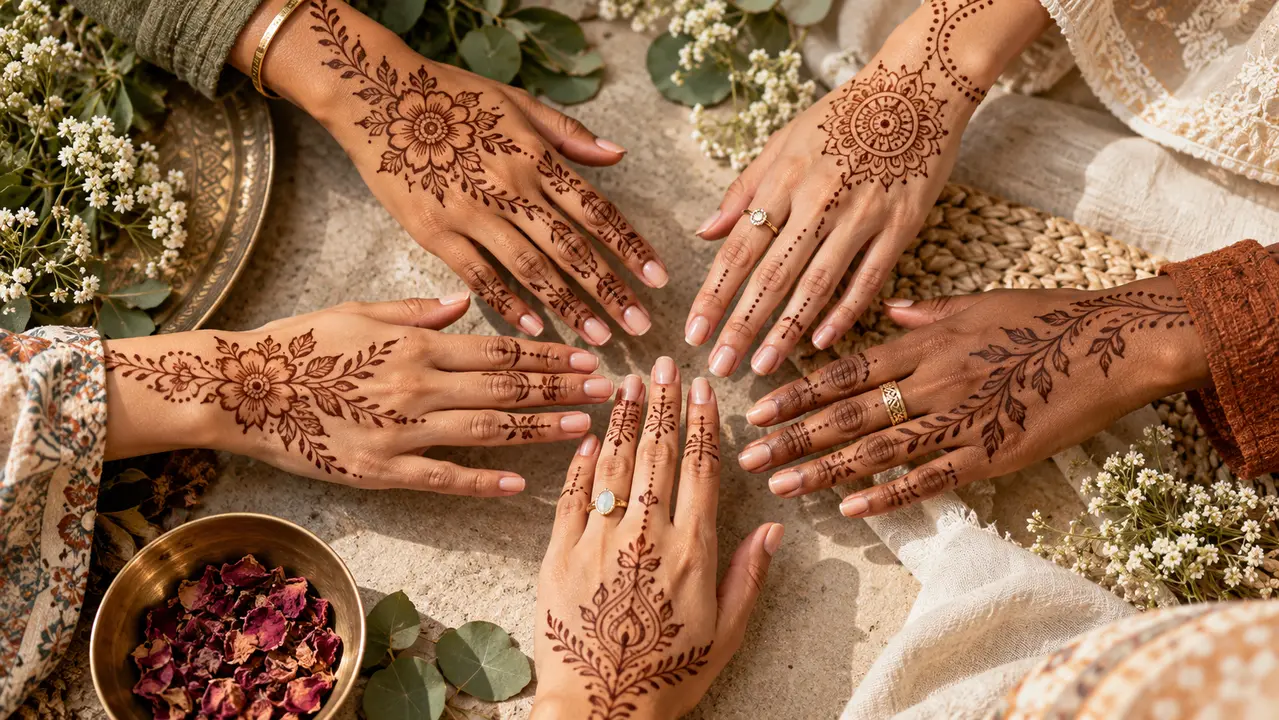
In several Indian wedding traditions, mehndi is a much-anticipated occasion. Decorated hands draw attention, but the designs are also part of a shared celebration.
Mehndi as Part of Wedding Preparations
The bride may have elaborate designs applied while her loved ones join in the celebrations. Practices differ between families, religions and regions.
Why Are Some Designs So Elaborate?
Larger compositions allow flowers, curves and details to be combined in many ways. This aesthetic choice does not mean that every Indian wedding features the same designs.
A Social as Well as a Visual Occasion
Photographs, conversations and preparations are part of the atmosphere. Sometimes the design becomes a shared memory of the occasion, lasting beyond the time it remains visible on the skin.
Finding Inspiration Respectfully
You can admire a floral style or an elaborate composition without claiming to recreate an entire ceremony on your own. When discussing a specific custom, consult documented accounts from identifiable settings.
Understanding Images of Bridal Mehndi
Designs may cover much of the hands, complement jewellery or be created during a dedicated session before the wedding. These observations do not, however, describe every Indian bride. Traditions vary with regions, communities and personal choices. Inspirational photographs mainly show aesthetic possibilities. It would be misleading to infer a religious rule or a fixed meaning for each flower without a specific source.
What Is a Mehndi Celebration?
At many South Asian weddings, mehndi can be both a form of skin decoration and an occasion for gathering. Yet it is important not to portray “the Indian wedding” as one single ceremony. India is home to numerous languages, religions and local customs, so the significance, sequence and form of celebrations may differ. Some events are carefully organised, others modest; some place great emphasis on the designs, while others focus mainly on spending time together.
What can be described without caricature is the dual appeal of bridal mehndi: often intricate artistic work and an opportunity to gather with loved ones during wedding preparations. Unlike a permanent tattoo, the designs change and fade over time. Their temporary nature is part of their aesthetic use.
How to Look at a Bridal Design
Start by distinguishing coverage, density and storytelling. Coverage describes the areas decorated: fingers alone, palms, backs of hands, forearms or feet. Density refers to the number of lines and the amount of space left bare. Storytelling comes into play when a composition includes small figurative elements, initials or personal references. These criteria provide practical ways to look at a design even when the bride's community is unknown.
A dense design is not automatically more traditional. An airy composition is not automatically Westernised. Commercial photographs and social media often highlight spectacular creations, but these are aesthetic choices among many others. When selecting a style, first consider the appearance you want on your own hands and the time you wish to devote to it.
What the Photograph Does Not Show
A photograph taken after the colour has developed does not tell you how long the application took, who created the designs or what choices were made for the wearer's comfort. Nor does it show the atmosphere of the celebration. Turning an image gallery into a guide to wedding “obligations” is therefore misleading.
Another often-overlooked detail: the two hands may have different visual roles within the same composition. One hand might have a central motif, while the other continues a pattern of lines or flowers. Close-up photographs sometimes isolate one area and obscure the overall balance. To understand a creation, look at it from different distances: up close to study the lines and farther away to appreciate its overall shape.
Choosing Inspiration Respectfully
You can enjoy a style without claiming that it represents an entire culture. When referring to a composition created by an identifiable artist, credit their work if you present it as a reference, and avoid reproducing protected imagery without permission. Visuals generated for Hennediscount must also be honest: an inspirational illustration is not a record of a real wedding.
When discussing a design with a professional artist, bring a few useful criteria: floral or geometric patterns, the amount of negative space, the area to be decorated, the level of detail and the occasion. This will lead to a much more productive conversation than simply asking for “real Indian henna”, which is too vague to guide the design.
What You Can Learn from a Ceremony Without Attending It
The role of art, family and preparation may be visible in a small detail: someone holds up their decorated hands to avoid damaging the design; relatives watch the application; the artist adapts a composition to the shape of the body. These moments illustrate both the practical demands and the social interactions of mehndi, without any need to invent an origin or a meaning for the decorative elements. Careful editorial writing favours such verifiable observations over attractive but undocumented stories.
Frequently Asked Questions
Do all Indian brides wear mehndi?
No. Practices depend on family and tradition.
Why are so many designs highly detailed?
It is a popular aesthetic in certain settings, but not a requirement.
Can you choose a small mehndi-inspired design?
Yes, provided that aesthetic inspiration is distinguished from the representation of a ritual.
Sources and References
- The 2024 UNESCO decision concerns 16 countries in North Africa and the Middle East, not India: it must not be used to substantiate Indian customs.
- The examples of ceremonies in India are described here in general terms; any future local claim requires research or a source grounded in a specific Indian context.
- UNESCO — Henna: rituals, aesthetic and social practices (2024): https://ich.unesco.org/fr/RL/le-henne-rituels-esthetique-et-pratiques-sociales-02116